CrossFit Gym in Downtown Los Angeles: What to Look for Before You Join
Downtown Los Angeles has become one of the best places in the city to train CrossFit. Between the Arts District, the Fashion District, and the broader DTLA core, there are now enough boxes competing for members that you actually have a real choice — which is great, but it also means it’s easy to sign a membership at the wrong gym and realize it three weeks in.
CrossFit isn’t like joining a big-box gym where the equipment and layout are basically interchangeable from one location to the next. The quality of your experience depends heavily on coaching, class size, programming, and culture — things you can’t fully judge from a website or an Instagram feed. This guide walks through exactly what to evaluate before you commit, so you can pick a box in Downtown LA that you’ll actually stick with, and stay with, for the long haul.
Why CrossFit Gyms Are Different From Regular Gyms
Before getting into what to look for, it’s worth understanding why the evaluation process for a CrossFit box looks so different from picking a regular gym.
At a traditional gym, you’re largely on your own. The equipment is standardized, the space is usually large, and success depends mostly on your own consistency and knowledge. At a CrossFit box, the gym itself is a much bigger variable. Coaching quality, programming philosophy, and class culture directly shape your results and your risk of injury. Two boxes in the same neighborhood, charging similar prices, can produce completely different outcomes for the same person — one might build them into a confident, injury-free lifter, and the other might burn them out or hurt them within a few months.
That’s why the checklist below goes well beyond “does it have a squat rack.” It’s built around the things that actually determine whether a box is worth your time and money.
Coaching Quality Comes First
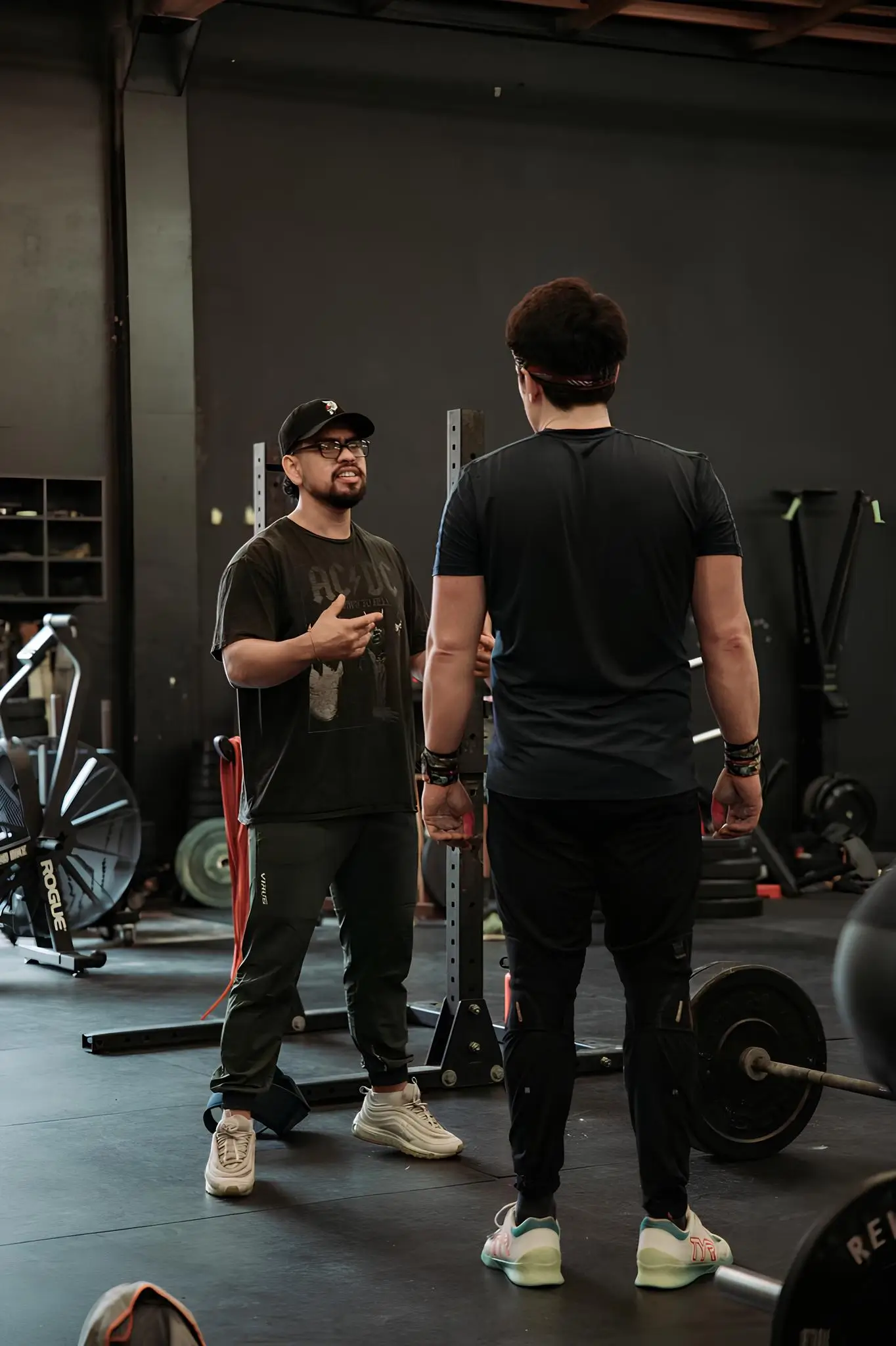
This is the single most important factor, full stop. CrossFit involves complex, technical movements — Olympic lifts, gymnastics skills, high-intensity conditioning — and bad coaching doesn’t just slow your progress, it increases your injury risk.
What to look for:
- Coaches who actively watch and correct form during class, not just call out the workout and start the clock.
- A visible focus on scaling movements for different ability levels, rather than a one-size-fits-all approach.
- Coaches who ask about injuries or limitations before your first class.
- A willingness to slow down and teach technique, especially for barbell and gymnastics movements.
- Coaches with recognized certifications (CrossFit Level 1/2, USAW, or similar strength and conditioning credentials).
- Continued education — coaches who stay current on movement standards and safety practices, not just people who were strong athletes once and started coaching without formal training.
Class Size Matters More Than People Expect
- A coach-to-member ratio that actually allows for individual attention (many well-run boxes cap classes in the 10–15 range per coach)
- Whether the gym adds a second coach or assistant when class size grows
- How crowded peak-hour classes (typically early morning and early evening) actually get in practice — ask to observe a class, not just tour an empty gym
- Whether the gym uses a booking system to cap class size, which is usually a good sign that they’re actively managing ratios rather than letting classes balloon
Programming Should Be Varied and Purposeful
Good CrossFit programming rotates through strength, conditioning, gymnastics, and Olympic lifting in a way that builds capacity over time, not just workouts that feel hard for the sake of feeling hard.
Questions to ask before joining
- Who writes the programming, and do they have a strength and conditioning background?
- Is there a strength cycle (e.g., periodized squat, deadlift, or press progressions) or is it just random daily workouts?
- Are skill-based movements (handstand work, muscle-ups, Olympic lifts) taught progressively, or just thrown into workouts without buildup?
- Is there any way to track progress over time, whether through the gym’s app, whiteboard tracking, or benchmark workouts?
- Does the programming account for recovery — are there built-in deload weeks or lighter days, or is every session designed to leave you completely wrecked?
A good sign is a gym that can clearly explain its programming philosophy in a sentence or two — for example, a strength-biased cycle paired with varied conditioning, or a focus on functional movement patterns building toward specific benchmarks. If nobody at the front desk can explain why the program is structured the way it is, that’s worth noting.
Space and Equipment Should Match Class Size
A 7,000-square-foot facility supporting small classes will feel completely different from a cramped 2,000-square-foot space trying to run the same size classes. Before joining, pay attention to:
- Whether there’s enough rig and platform space for everyone to lift at once without excessive waiting
- Equipment condition — worn-out barbells, cracked plates, and unmaintained rowers are signs of a gym that isn’t reinvesting in the space
- Whether the floor plan separates lifting areas from open conditioning space, which matters a lot for safety when a class is doing barbell work and metcon work in the same session
- Ventilation and airflow — Downtown LA warehouse-style gyms can run hot, and poor ventilation makes already-intense workouts harder to sustain safely
- Availability of specialty equipment (rings, GHD machines, assault bikes, sleds) if you’re interested in more advanced gymnastics or conditioning work down the line
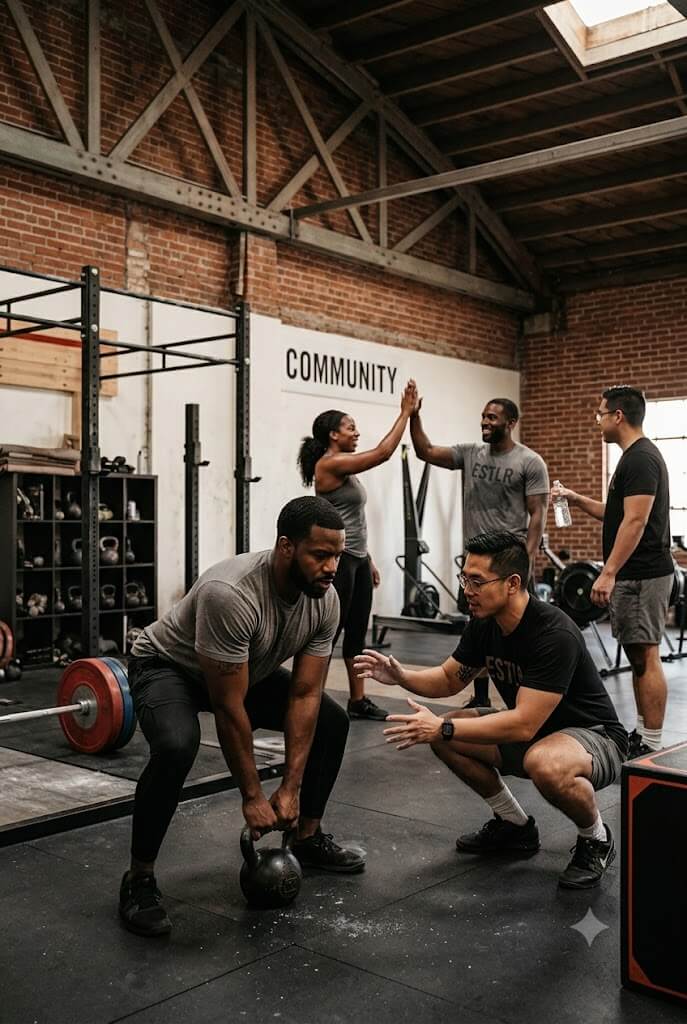
Community and Culture Are Not Just Marketing Fluff
CrossFit’s biggest advantage over solo gym training is the built-in accountability and community. But that only works if the gym actually fosters it rather than just claiming to in its marketing copy.
Signs of a genuinely strong culture:
- Members who know each other’s names and check in when someone’s missing class.
- Coaches who remember your goals and injuries between sessions.
- A welcoming attitude toward complete beginners, not just people who already look fit.
- Optional community events (competitions, socials, nutrition challenges) that people actually show up to.
- A sense that members are rooting for each other during workouts, not just competing against a leaderboard.
Ready to try your first class? 3 Sessions for $25 — no commitment, no contracts, no pressure
Flexibility in How You Can Start
Not everyone wants to commit to a full membership before trying a gym. The better boxes in Downtown LA typically offer more than one way in:
- Drop-in classes – best for testing the coaching style and community before committing
- A trial period or intro week –some gyms bundle a few classes together as an onboarding option
- Personal training – useful if you want one-on-one attention before joining group classes
- Additional services like physical therapy –strong signal that a gym thinks about long-term member health, not just workout intensity
- Nutrition coaching or accountability programs –a bonus if you want support beyond just the workouts themselves
If a gym only offers a single, rigid membership option with no way to test it first, that’s worth factoring into your decision.
What a Strong First Month Should Look Like
A well-run box usually eases new members in rather than throwing them into advanced programming immediately. A reasonable first month often includes:
- **Fundamentals sessions or a foundations program** covering basic movement patterns (squat, hinge, press, pull) before jumping into full class programming.
- **Gradual exposure to more complex lifts** like the snatch or clean and jerk, rather than expecting proficiency on day one.
- **Regular check-ins from a coach** about how your body is responding to the volume and intensity.
- **Encouragement to scale** rather than pressure to keep pace with more experienced members.
If a gym skips straight to full-intensity group classes with no onboarding process at all, that’s a sign the gym is optimized for people who already know what they’re doing — which may or may not be what you’re looking for.
Putting It All Together
The best CrossFit gym in Downtown LA for you isn’t necessarily the biggest, the cheapest, or the one with the flashiest Instagram. It’s the one where the coaching is genuinely hands-on, the class sizes let you actually get attention, the programming has a clear purpose, the safety culture takes injury prevention seriously, and the community makes you want to show up on the days you don’t feel like it. Take the time to trial a few boxes before committing — the extra week of research is a lot cheaper than a wasted year-long membership.
Frequently Asked Questions
Not sure where to start, or have questions about memberships? Get in touch with our team today, and we will help you find the perfect path for your fitness goals.